WorkCoreShift CRM
The system we run the studio on.
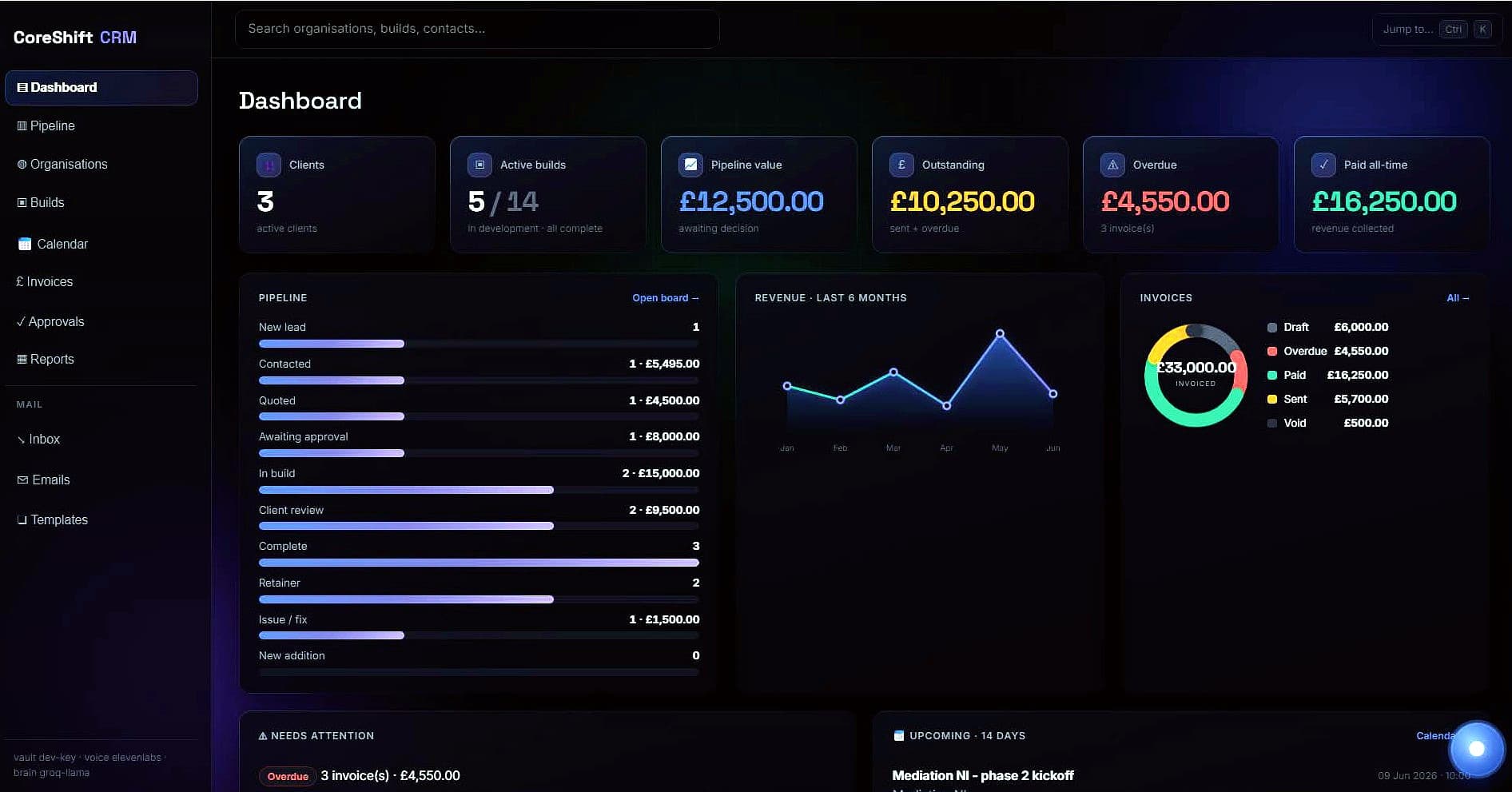
We don’t run the studio on off-the-shelf software. We built our own. CoreShift CRM is the system the studio works in day to day: the pipeline, the builds, the invoices, the approvals and the reporting, in one product we own outright.
Why we built it
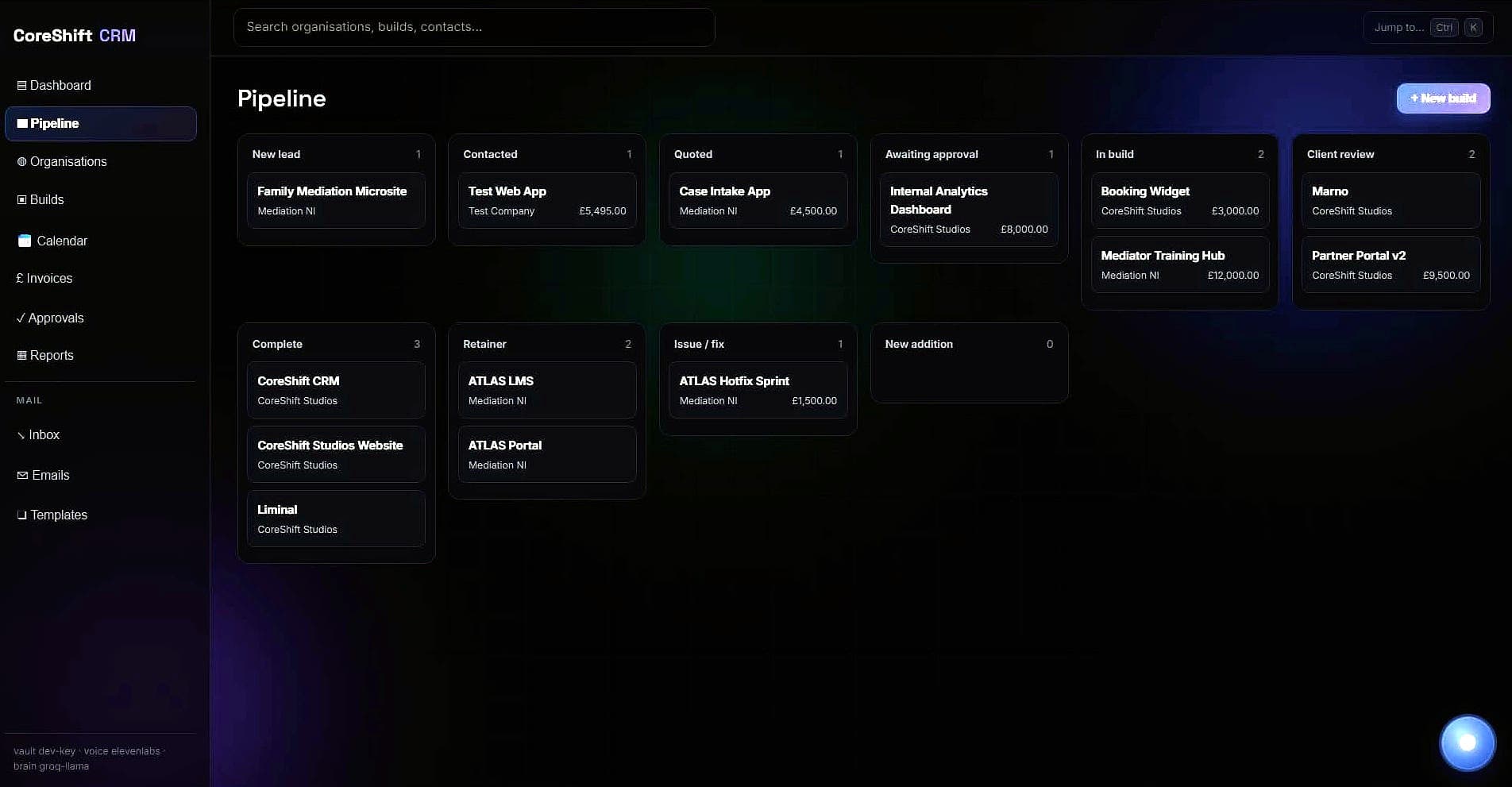
It is the argument we make to clients, applied to ourselves. A generic CRM assumes a generic business, and a software studio is not one. So the CRM is shaped to how the work actually moves: an enquiry becomes a quote, a quote earns an approval, an approval becomes a build, a build becomes an invoice, and the good ones become retainers.
Every one of those stages is a place in the system, not a note in someone’s head or a tab in a spreadsheet. Nothing about a build, an invoice or a decision lives anywhere it can be lost.
Pipeline
Every build tracked from new lead through contacted, quoted, approval, in-build, client review, complete and retainer. A kanban board and a sortable table over the same data.
Builds
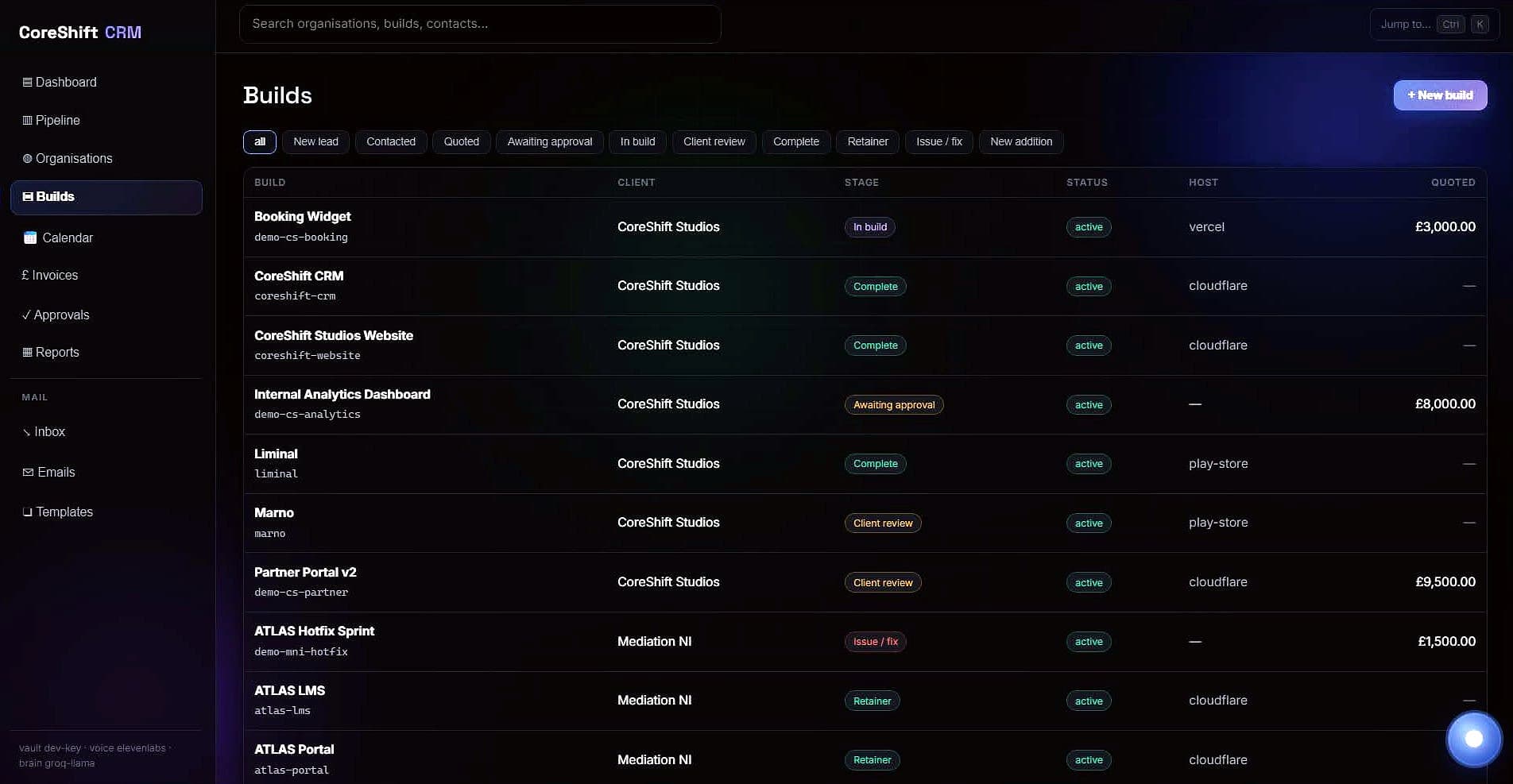
Each project as a record: stage, status, host, live URL, quote. One source of truth for what is being built, for whom, and where it runs.
Invoicing
Draft, sent, paid, overdue and void, with one-click PDFs and a running view of what is outstanding. The dashboard surfaces overdue invoices before they slip.
Approvals
Sign-off gates, so nothing moves to build without an explicit yes. The decisions that matter are recorded, not remembered.
Reports
Generated build and revenue reports for any date range, exportable to PDF, CSV or Markdown. The numbers come out of the system, not a spreadsheet.
Mail and calendar
A built-in inbox, templated emails and a calendar, so client correspondence and scheduling sit alongside the work they relate to.
Inside the system
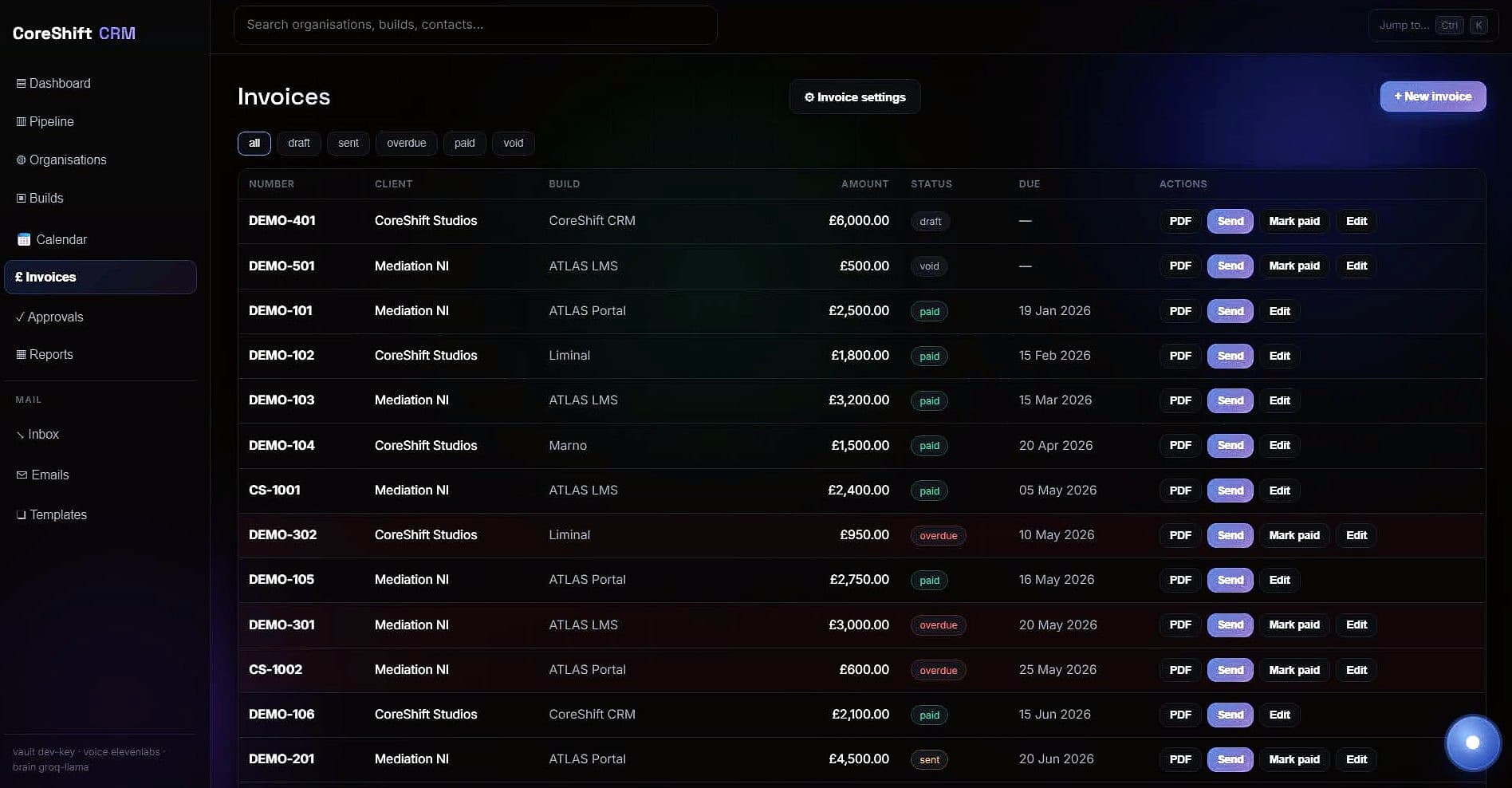
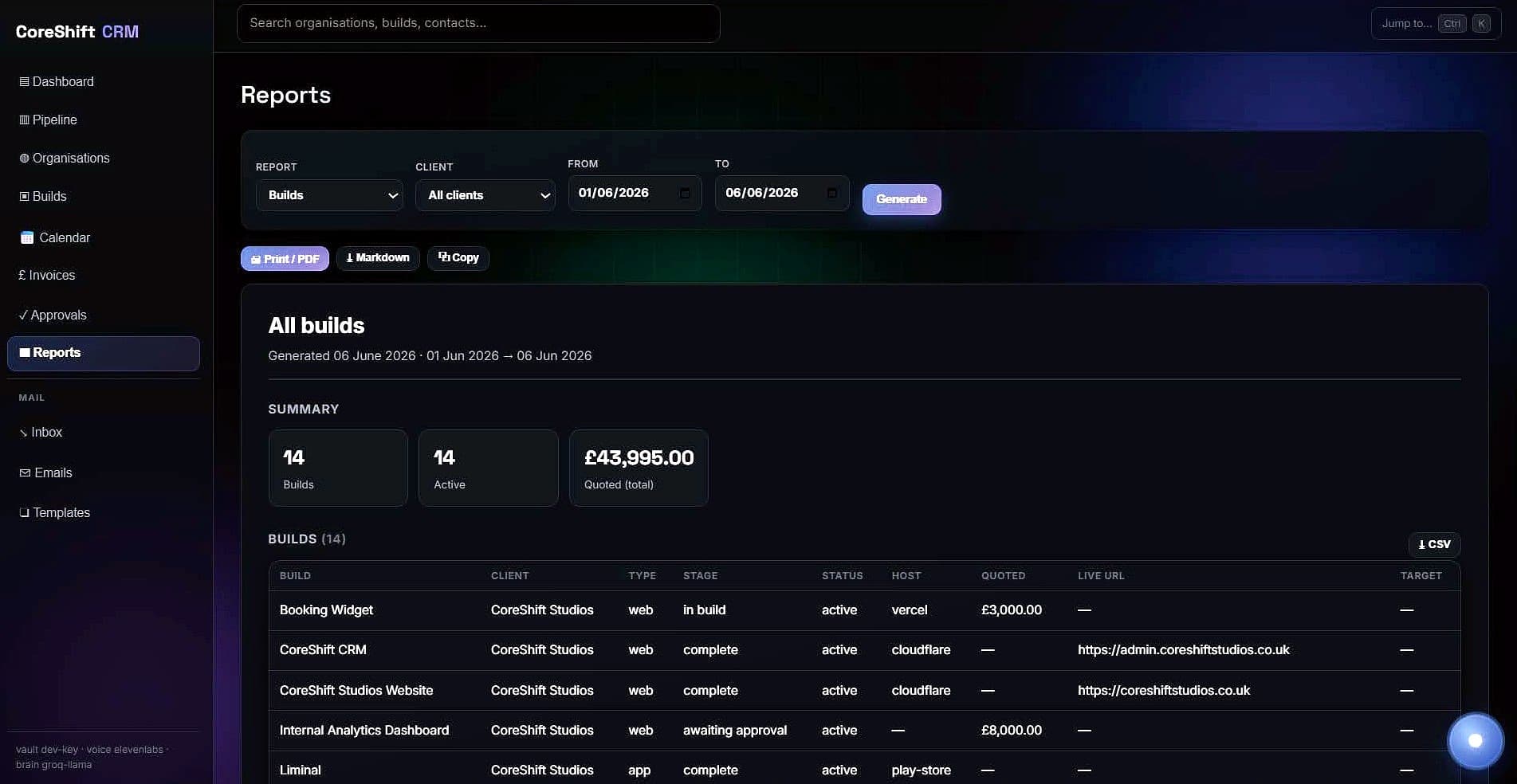
The point
This is the same kind of operational system we build for third-sector organisations and small businesses. Change the nouns and it is a casework system, a booking platform, an invoicing tool, a membership database. Pipelines, approvals, invoicing and reporting are the bones of most of the software a small organisation actually needs.
We build our own tools to the standard we would hand a client, because it is the standard. If you want to see what bespoke looks like before you commission it, this is it.
Start here
Start with a conversation, not a contract.
A free, no-obligation conversation about where your team’s work gets stuck and what a system built around it could do, with a rough sense of cost. The thinking is yours to keep.